

How To Clear Dead Grass
Thatch… recognizing it, and removing it!
What is Thatch?
Thatch is a matted layer of dead grass, roots and other matter that builds up in grass over time. Its very common and collects on most lawns at some time or another. Thatch collects above the soil at surface level and becomes intertwined in grass stems. When the cycle of decomposition is delayed for any variety of reasons, dead matter will begin to build up. As the build up increases the dead matter becomes stacked and then packs down or mattes and causes healthy grass blades to become stressed and weak; the lawn thins, and eventually dies. This will typically be evident in a lawn which is undernourished and has a yellow green appearance rather than the more preferred "Grass Green" colour.
 Thatch can actually choke a lawn to death! As it thickens it robs the soil of air and hinders water absorption and nutrient penetration to the soil and root system. Not only will excessive thatch kill the grass, left undeterred long enough it will damage the soil so that even if removed, new growth in that area will be sparse at best. Thick thatch levels can also become a haven for insects. Moisture rich matted thatch can be an excellent breading ground for insects and disease.
Thatch creates a water barrier, prevents new grass from growing and harbors insects. It collects quickly and before long the lawn and its entire root system is at risk.
Lawn dethatching, when performed as needed, will go a long way in maintaining a healthy, green lawn! Dethatching allows new grass shoots to grow thick and lush.
Controlling Nuisance Thatch
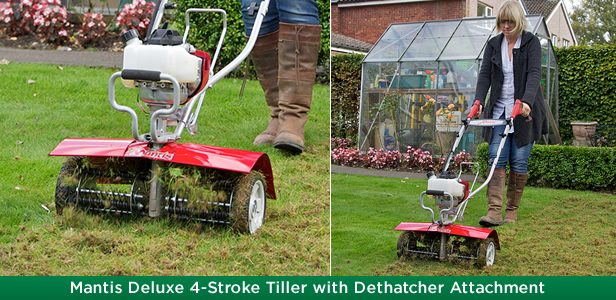
A thin layer of thatch, up to a quarter inch, is common and easily controlled with a Dethatcher. Dethatchers are powered rakes, (also commonly known as turf rakes, moss rakes, scarifiers or power rakes). They rake at the soil surface lifting dead matter to the top of the lawn so it can be removed. Dethatchers utilise rows of spring steel combs that lift thatch to the surface. The thatch can be collected and placed in the compost bin, or discarded.
Moderate Thatch
When thatch levels exceed a quarter inch to about a half of an inch, you have a moderate thatch problem. By definition, turf rakes only 'scratch the surface'. By this time the problem may have affected the upper soil level. Dethatching will help control the problem, though odds are, even if dethatched thoroughly at this point there will be bare spots left behind and the remaining grass in the area affected will be sparse and weak. Dethatching followed by seeding and fertilizing may be remedy enough for the soil and help the lawn recover.
Excessive Thatch… and the Need for Aeration
When thatch levels are a half an inch thick or higher and any new growth is weak and sparse, the root system is being compromised. In time, thatch will compact the soil and suffocate the root system. Soil aeration will be needed to loosen the soil to allow air, water, and nutrients to penetrate the soils root system. An Aerator would offer the starved soil much needed air and nutrients.
When to Dethatch Your Lawn
Depending on where you live in the country, you should dethatch in early autumn before you fertilize, or in the spring after the grass has begun to green and grow.
If you are planning to overseed your lawn, you should plan to dethatch and aerate before seeding.
How To Clear Dead Grass
Source: https://mantis.uk.com/removing-thatch-from-lawns/
Posted by: gibbsbeferal41.blogspot.com
0 Response to "How To Clear Dead Grass"
Post a Comment